
Cameras
I Spent a Week With a Camera That Refuses to Show Me My Photos. I Wanted to Hate It.
Rolling Square's screenless "post-instant" camera shouldn't make sense in 2026. After a pre-launch week with one, I'm mostly annoyed at how much it does.
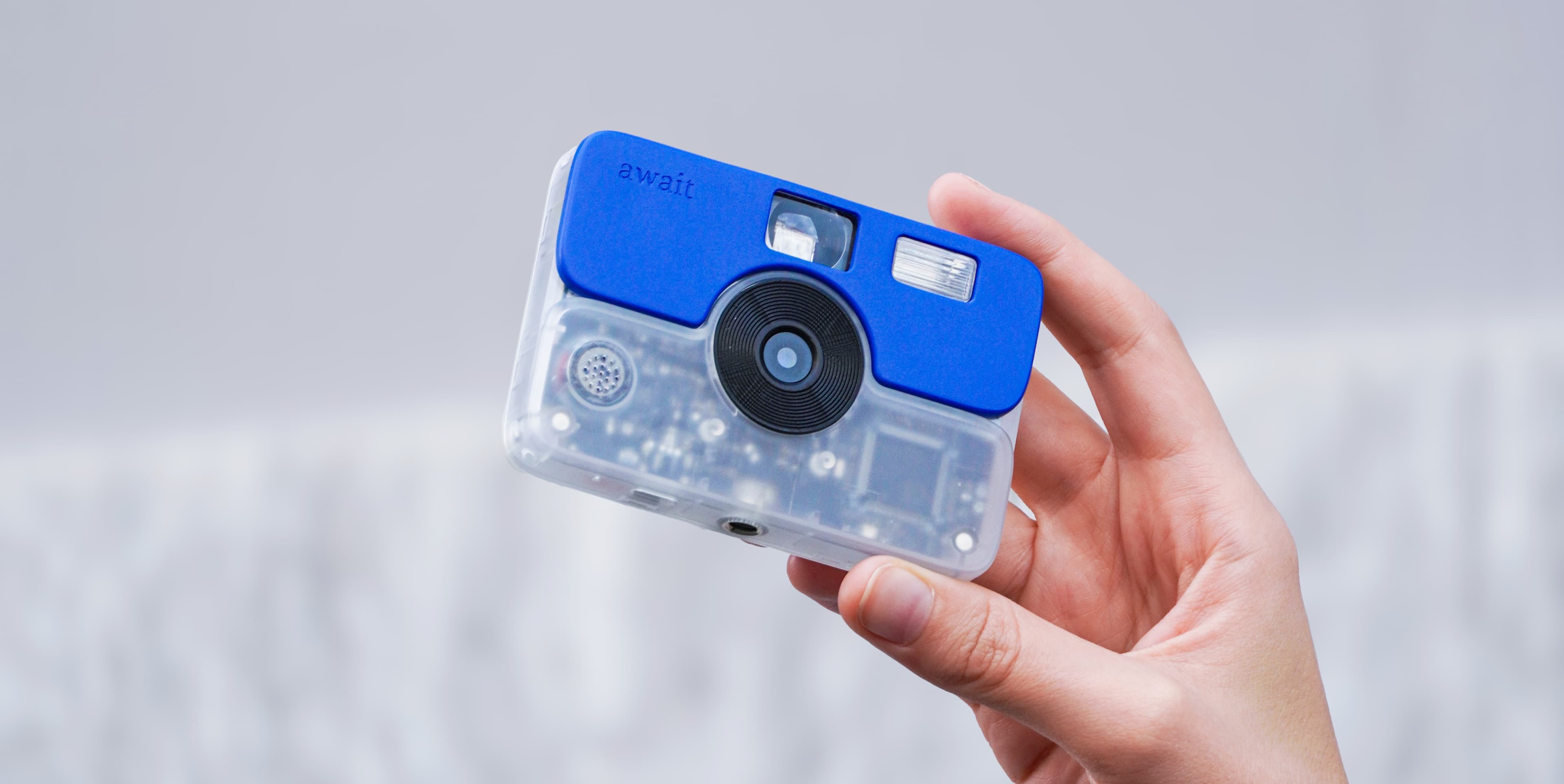
Disclosure: Rolling Square sent us a pre-production Await for early hands-on ahead of its Kickstarter launch. Nobody on their side saw this piece before it went up, and there are no affiliate kickbacks.
I review gadgets that solve problems nobody has. So when a Swiss accessory company (the inCharge-cable people) mailed me a camera with no preview screen and a deliberate, film-style rhythm, I assumed I'd have my snark written by lunch.
I did not have it written by lunch. I'm a little annoyed about that.
The pitch that should be insufferable
Await calls itself "the post-instant camera." You shoot in rolls of 24, you can't chimp at a preview screen because there isn't one, and every few rolls you sync to the app, which offloads the camera and sends real prints to your door. In an era where my phone holds thousands of photos I will never look at again, someone built a camera whose entire feature list is restraint.
On paper this is a productivity app's idea of a vacation. In hand, it's disarming.
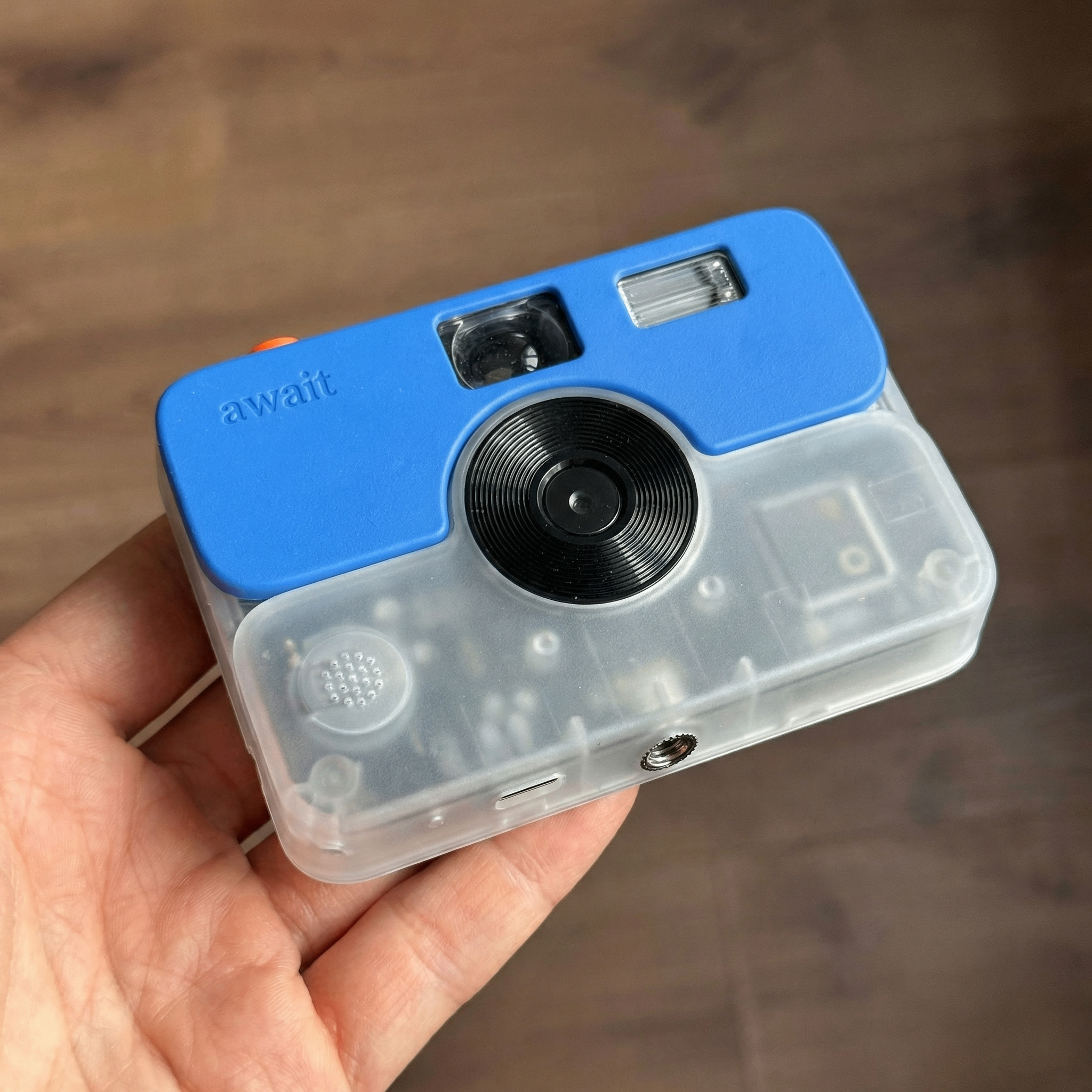
Two buttons. One viewfinder. No menu to get lost in.
So what is the "roll of 24," really?
Here's the part the marketing undersells: the 24 isn't a hard cap. Finish a roll and it just resets, you keep shooting. The rhythm is the point. Twenty-four frames at a time nudges you to choose what matters instead of spraying. The only real limit is storage: the camera holds about three rolls (72 shots) before you sync it to the app, which offloads your photos, queues your prints, and clears it for the next 72. The scarcity is deliberate, and it's what brings back the feeling of a finite roll of film.
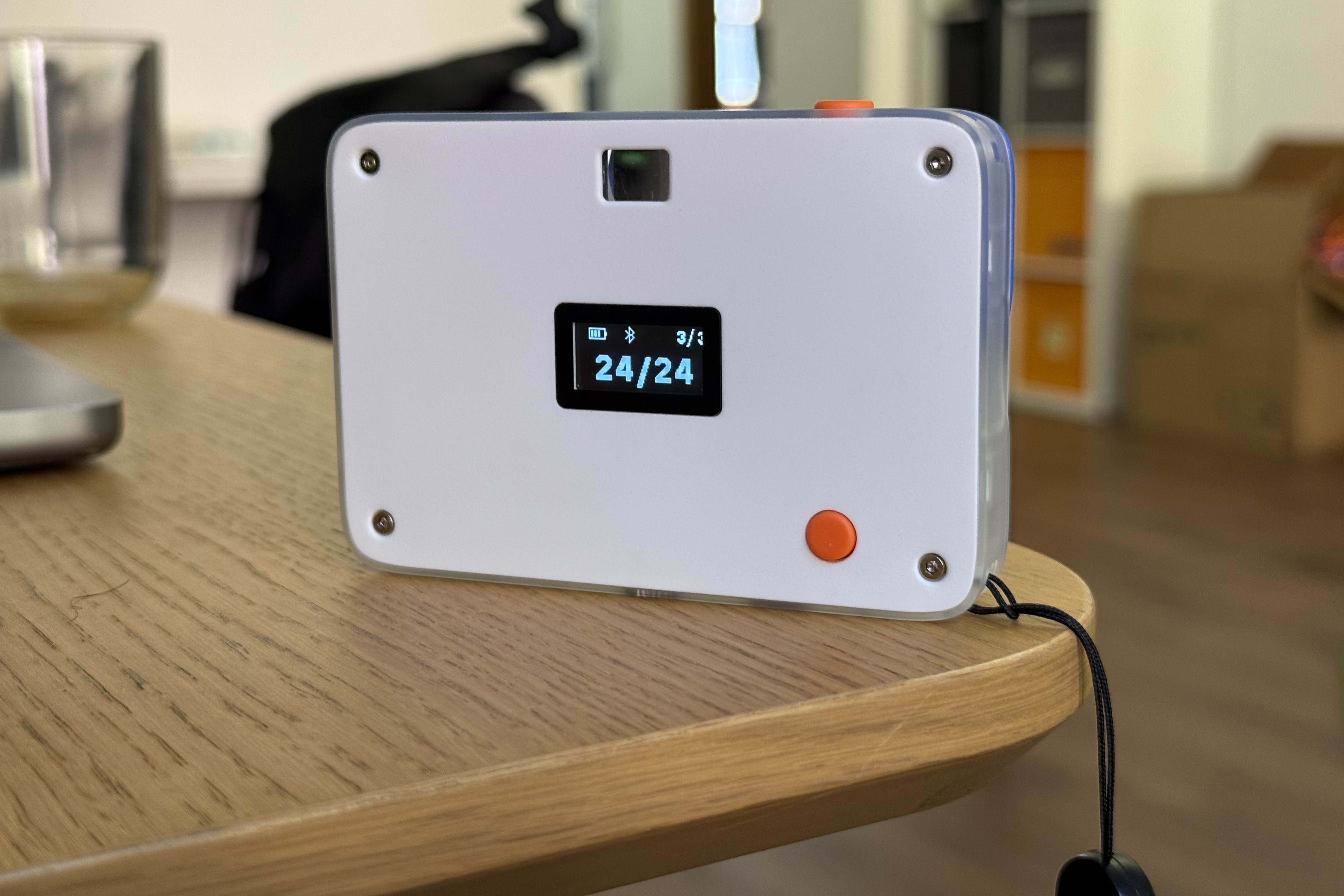
The only display on the whole camera is a tiny counter on the back. No preview, just 24/24, then it resets.
The hardware is the first surprise
It's a frosted, semi-transparent shell (full Game Boy Color and translucent-iMac nostalgia) with a magnetic front plate (mine was blue; they swap). Real lens, a tiny optical viewfinder you actually hold up to your eye, two satisfying orange buttons, a real xenon flash, and exposed Torx screws on the back like it wants you to know it's a real object. It disappears into a jacket pocket.
It feels like a product, not a toy. That matters, because the next part lives or dies on whether you trust it.
Shooting with no preview is the actual feature
Here's what I didn't expect: the no-preview thing fixes something. I raised the camera, framed through the little finder, pressed the button, and then I moved on. That is the disorienting bit. No reviewing. No "let me take that again." No falling into my phone for twenty minutes. I just kept being where I was.
By day three I'd stopped reaching for confirmation that the shot was good. And the roll of 24 does the same job from the other side: it resets, sure, but framing your shooting in small sets means you take the one that matters instead of firing off 200.
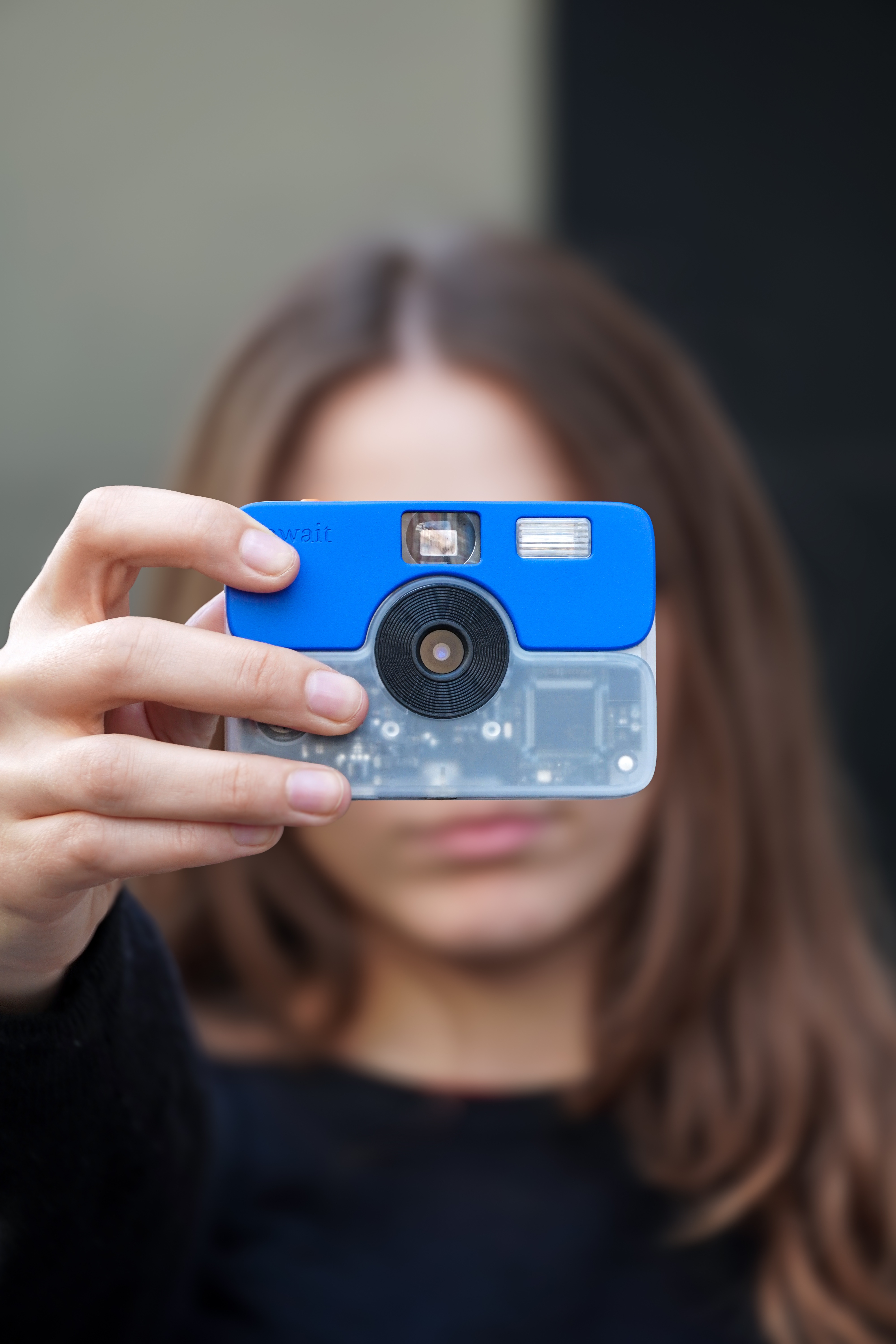
The first gadget in a while that asks for less of your attention, not more.
And then the prints show up
I'll be honest, the part I rolled my eyes hardest at, waiting for prints, is the part that got me. A few rolls in, you sync, and days later you're physically holding the photos. It felt completely different from a camera roll. You forget what you shot, so opening the envelope is a tiny event. I've handed exactly zero phone photos to another human this year. I handed three of these to friends in a week.
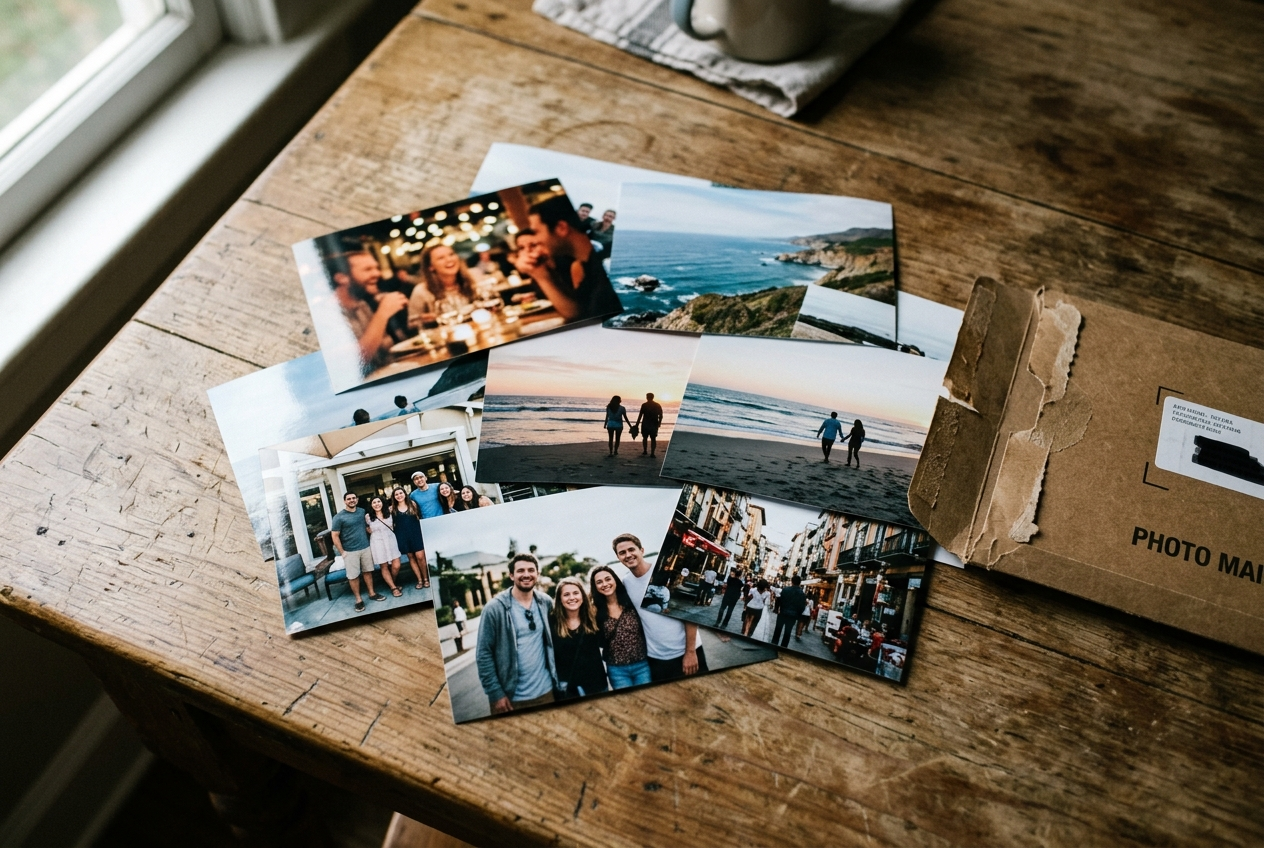
Remember objects?
The honest cons
It is not a phone-camera replacement and won't pretend to be. Low light is flash-or-nothing, no zoom, no editing, no second chance on a missed shot. That's the point, but know what you're buying.
The wait is a feature you have to actually want. If "I want this photo now" describes you, this will drive you up a wall.
Prints cost money over time. Budget for it.
It's a Kickstarter. Rolling Square has a real track record of shipping (the inCharge campaigns delivered), which is more than most. But pre-production hardware is pre-production hardware.
Who it's actually for
Not everyone. But if you've ever said "I'm on my phone too much," shop for someone who romanticizes film, or just miss having photos you can hold, this is the most thoughtful take on that itch I've handled. It's less a camera than a small, deliberate argument about attention.
The verdict (pre-launch)
I came to dunk on a screenless camera. Instead I kept it in my pocket all week and printed my favorite shots like it's 2005. Await just launched on Kickstarter, and early backers get the steepest discount.
More to read
All stories →
wearables
Your Smartwatch Is Not a Tricorder: What Wearables Actually Catch, and What Their AI Coaches Are Guessing
Wrist wearables have earned a narrow, real place in preventive care, but the list of clinically useful features is shorter than any keynote suggests. The new AI coaches do not change that math.
lifestyle
Kobo's Libra Colour discount just claws back the price hike it quietly slipped in weeks earlier
Kobo bumped the Libra Colour to $259.99, and now a coordinated sale brings it back to $229.99. Call it a deal if you want, but the math says you're paying yesterday's price.
audio
Why Apple's Next AirPods Could Quietly Become the Best Smart Glasses You'll Never Wear on Your Face
The most interesting smart glasses of the next few years might not sit on your nose at all. If the AirPods roadmap holds, Apple is building a face computer that hides in your ears.